LinkedIn Profile Builder That Gets You Hired Faster
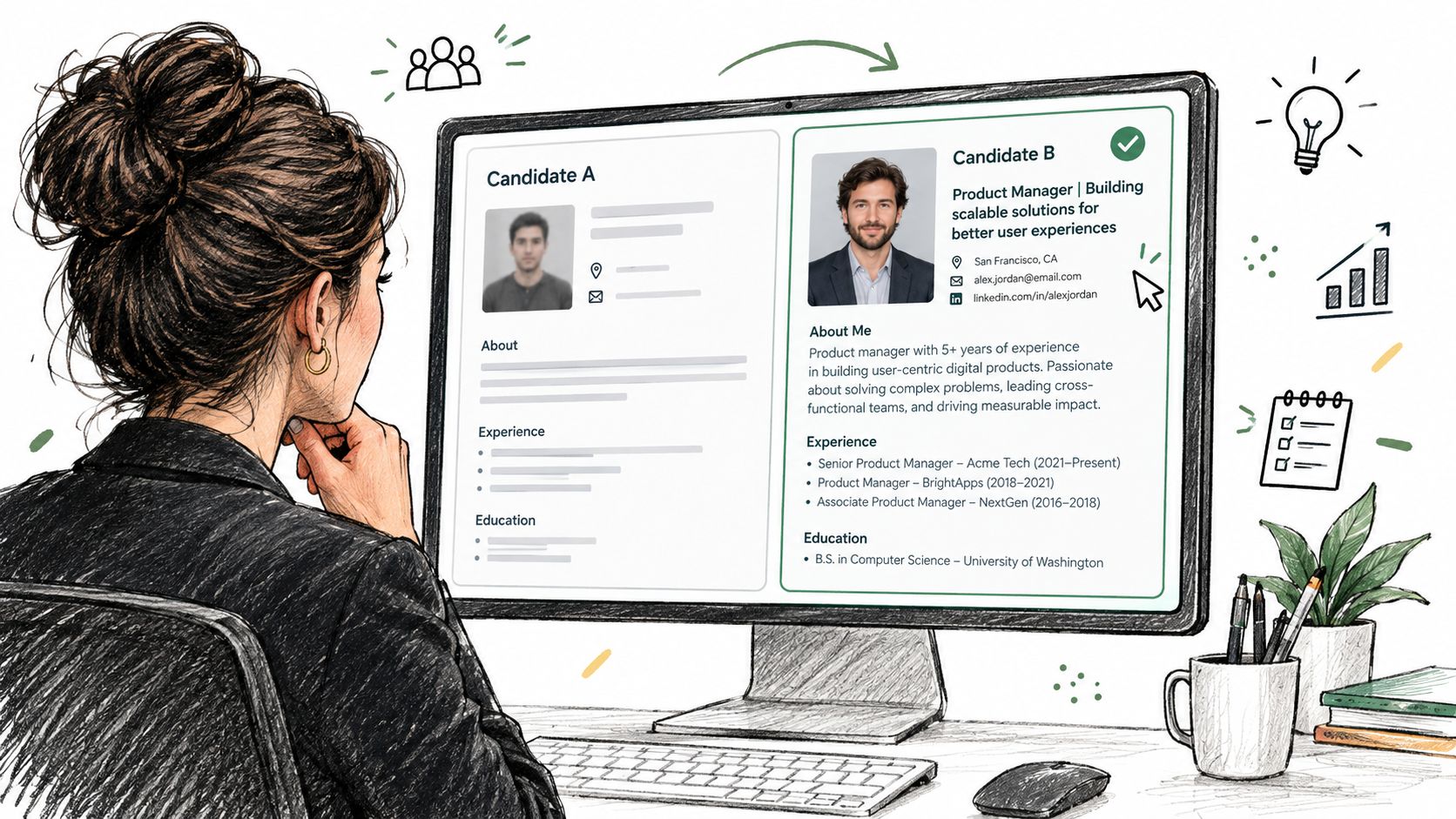
A recruiter opens two LinkedIn profiles for people with similar experience. One has a current role, a clear headline, evidence in the Experience and Featured sections, and a professional portrait that makes the person immediately recognizable. The other has a vague title, several empty sections, and a casual image cropped from a group photo. The recruiter may never discover the second candidate's stronger work because the first profile feels easier to understand and safer to trust.
That first impression matters to both people and systems. A recent peer-reviewed LinkedIn study found that incomplete profiles reduce hireability ratings even when job seekers have solid qualifications. The effect was mediated by lower perceived trustworthiness, professionalism, warmth, and competence, according to the peer-reviewed study on LinkedIn profile completeness and hireability.
A LinkedIn profile builder isn't just a resume copier or a box-ticking template. Used properly, it helps you assemble a trust asset that communicates your role, expertise, proof, and professional identity to recruiters, prospective clients, colleagues, and AI ranking models. It also helps you fix the most visible weakness quickly, your profile image, with a generative AI headshot rather than a lengthy photography appointment.
This guide moves from the basics to practical optimization. You'll see how profile builders work, which features deserve attention, how to use generative AI portraits for a sharper first impression, and how professionals, job seekers, recruiters, and teams can apply the same process differently. For a broader foundation in presenting your expertise, explore this guide on building a personal brand on LinkedIn.
What a LinkedIn Profile Builder Really Does
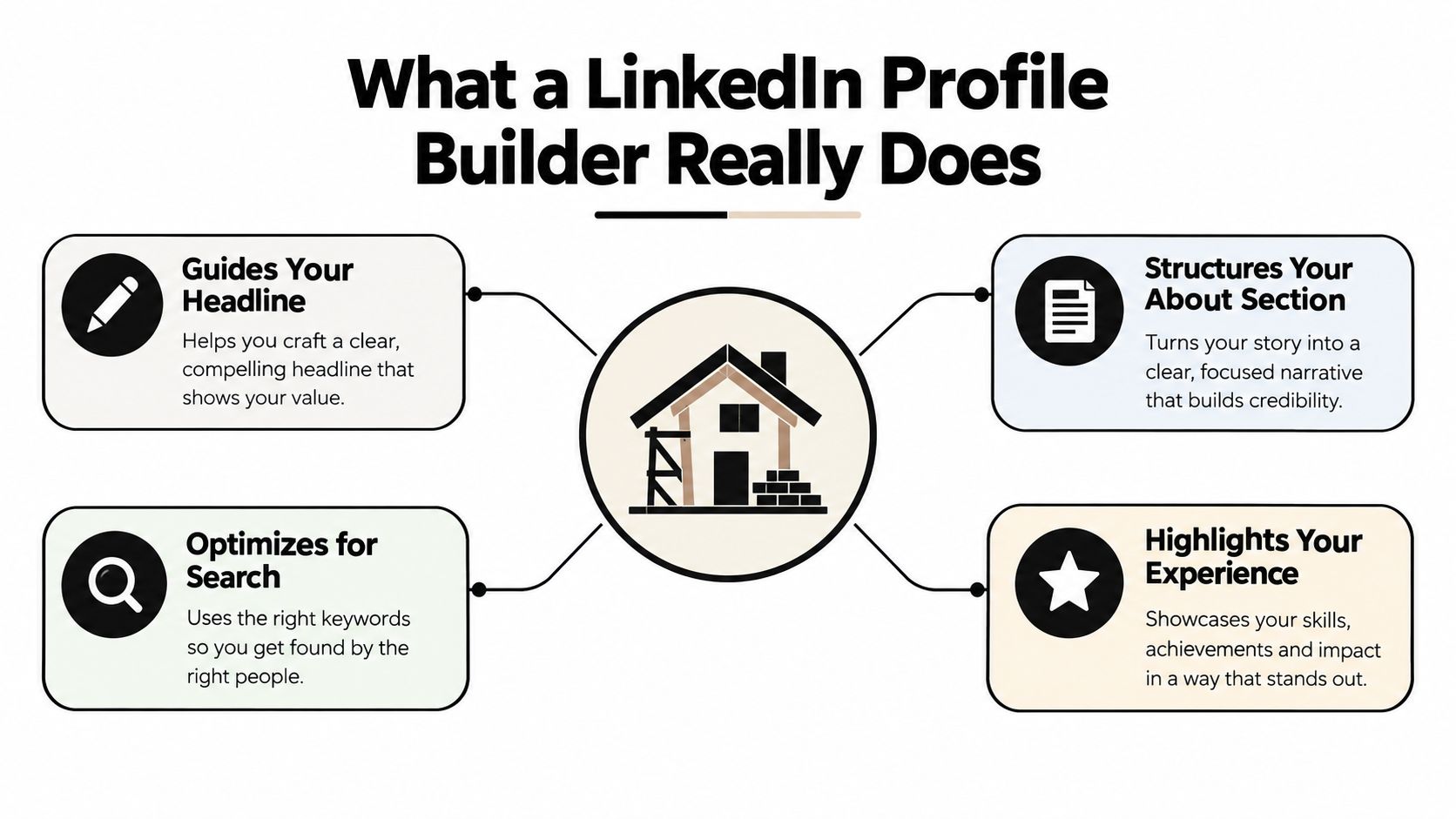
A static template gives you a page. A useful builder gives you a system for making that page understandable, complete, and current.
Think of the difference between printing a single flyer and maintaining a personal website. A flyer can list your name and role, but it can't guide a visitor through your services, evidence, background, and next step. A website builder helps you organize those pieces so the whole experience makes sense. A LinkedIn profile builder should do something similar with your headline, About section, Experience, Skills, Featured content, and visual identity.
LinkedIn's profile completeness system has existed at the product level for a long time. Its profile level meter documentation says the meter increases as members add suggested sections, while LinkedIn's blog explains that the scoring model was updated to emphasize factors users can control, such as Skills, while also considering profile freshness. That changes the practical meaning of “complete.” You aren't finished when every field is filled once. You're maintaining a profile that reflects your current work and direction.
Verändern Sie Ihr professionelles Image
Erhalten Sie atemberaubende KI-generierte professionelle Fotos in weniger als einer Stunde. Laden Sie normale Selfies oder Gruppenfotos hoch, wählen Sie aus über 100 Stilen und wir erstellen Hunderte von perfekten Aufnahmen, die Sie von Ihrer besten Seite zeigen.
Structure beats keyword stuffing
Keywords still help people find relevant expertise, but repetition alone doesn't create credibility. A profile that says the same skill in every field can look artificial, especially when its Experience section provides no proof and its recent content focuses on unrelated topics.
AI ranking models and human readers both benefit from topic coherence. If your headline says “B2B Content Strategy,” your About section explains how you build content systems, your Experience describes related outcomes, and your Featured section shows useful work, the profile forms a clear pattern. That pattern is stronger than a crowded list of disconnected terms.
Your writing should also sound like you. If you need help preparing posts that retain a natural voice, use a resource on how to write engaging LinkedIn content before publishing. The same principle applies to profile copy. Let tools improve structure, but keep your examples, judgment, and career story authentic.
A generative AI headshot belongs inside this broader system. It isn't a substitute for strong writing, but it gives the profile a current visual identity without waiting for a photography session. For a focused look at that workflow, see the LinkedIn headshot generator guide.
Key Features to Look For in a LinkedIn Profile Builder
A good builder should reduce decisions, not create another dashboard that you have to manage. Evaluate each feature by asking one question: does this help a recruiter or client understand and trust me faster?
The practical checklist
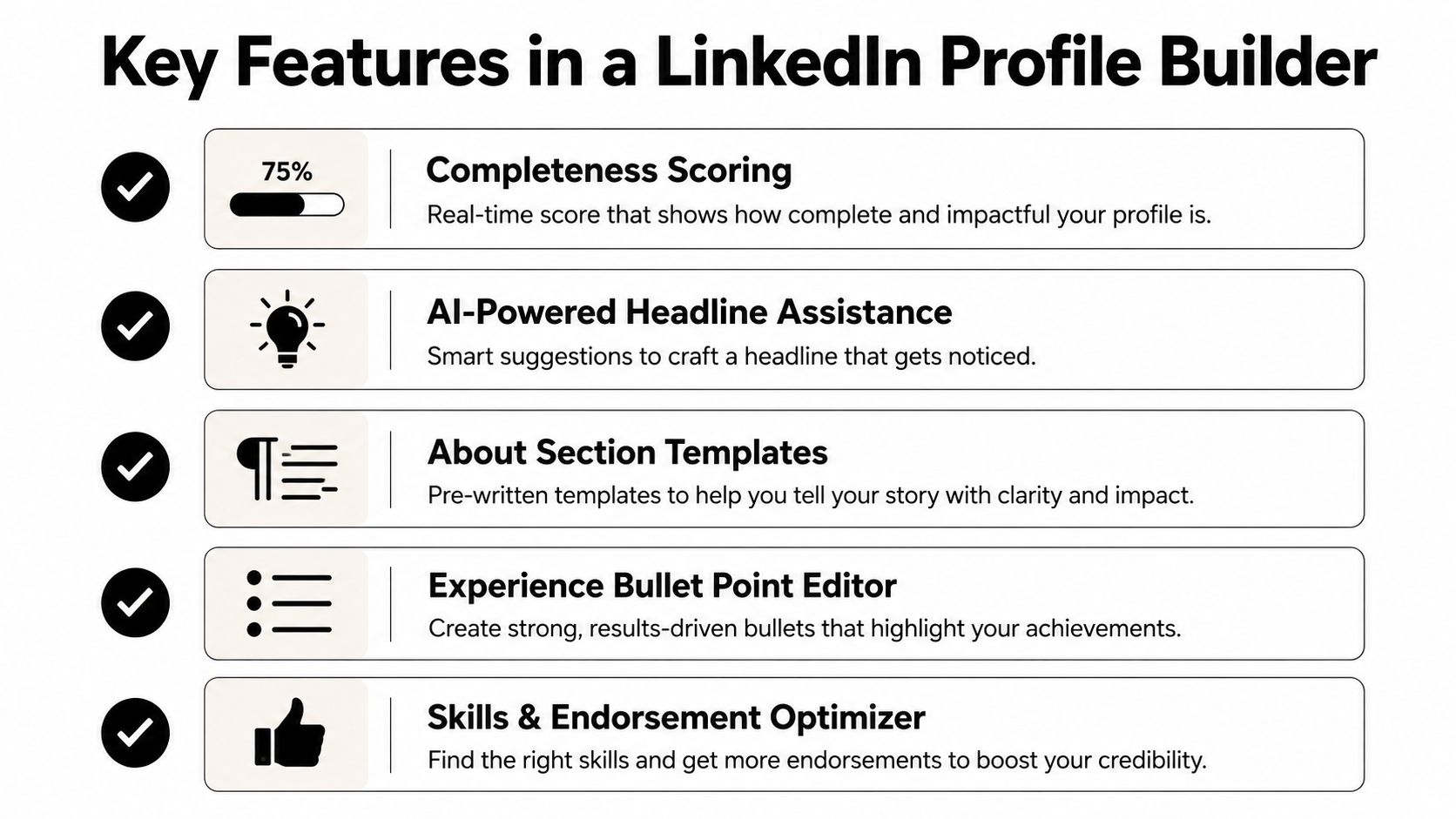
- Completeness guidance: Look for prompts that identify missing sections, stale information, and weak areas instead of giving you a blank template.
- Headline assistance: The tool should help you state your role, audience, and value clearly. “Marketing professional” is broad. “B2B content strategist helping software teams explain complex products” gives readers a useful direction.
- About support: A strong builder should help you lead with a clear opening, explain your specialization, and connect your experience to the work you want next.
- Experience editing: Choose a tool that turns responsibilities into evidence-based descriptions. “Managed content” is less informative than an honest explanation of what you owned, who it served, and what changed because of your work.
- Skills coherence: Skills should support the rest of the profile. Add capabilities you can demonstrate through Experience, Featured work, education, or recommendations.
- Featured prompts: A builder should remind you to show proof, such as a portfolio item, presentation, article, product, or relevant post.
- Visual identity: Generative AI headshot integration can remove the delay between deciding to refresh your profile and having a polished, business-appropriate portrait ready to use.
An independent 2026 analysis of more than 6,000 LinkedIn profiles found an average profile score of 71.6 out of 100 and a median of 72, indicating that many actively optimized profiles still aren't fully complete. The figures appear in this 2026 LinkedIn profile statistics analysis. A builder should help you find the missing substance behind that score, not encourage you to chase a number without improving clarity.
The difference is speed with judgment. A basic builder can help you start, while an optimization-focused option helps you decide what belongs, what needs proof, and what a visitor should notice first. If the tool produces polished text but leaves your image outdated, the profile still communicates mixed signals.
Why Your Profile Photo Makes or Breaks Trust
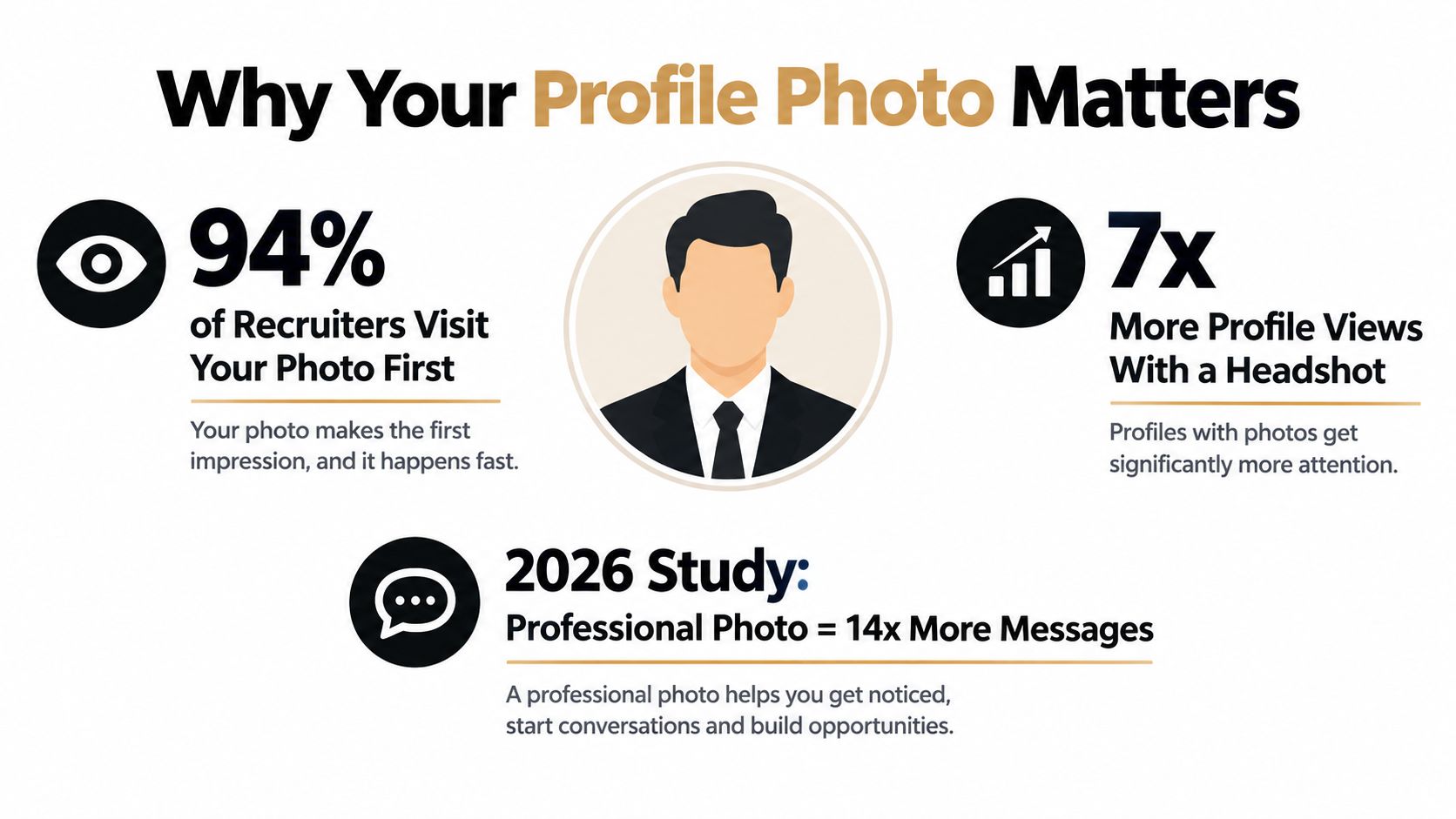
A recruiter opens your profile and sees a blurry selfie, an outdated portrait, or no image at all. Before reading your headline, they must decide whether the profile feels current and intentional. Your photo acts like the sign above a storefront. It does not prove your expertise, but it shapes whether someone wants to look closer.
An independent 2026 analysis of 14,506 public LinkedIn profiles across 608 U.S.-based companies reported that only about 50% of professionals used a professional headshot. Roughly 40% used a selfie, casual, or blurred image, while about 10% had no photo, according to the LinkedIn headshot trends analysis. The figures point to a widespread trust gap that a profile builder can help you address quickly.
What a usable generative AI portrait needs
LinkedIn recommends a clear, high-resolution, head-and-shoulders image with good lighting and a neutral background. Its profile picture guidance also recommends refreshing the picture every couple of years so it continues to reflect your current appearance.
Generative AI headshots can make that update much faster. Starting from your own photos, you can test professional clothing, expressions, settings, and backgrounds without arranging a photography session. Choose the version that matches your field and personality. The goal is a credible introduction, not a polished character who looks unlike you.
Composition still matters. At thumbnail size, the face should fill about 60% to 70% of the frame, while head-and-shoulders framing should survive LinkedIn's circular crop. The professional profile image advice by Narrareach explains these practical sizing and framing considerations. A profile builder that previews the crop can reduce unpleasant surprises after upload.
LinkedIn states that an ideal profile picture can range from 400 × 400 pixels up to 7680 × 4320 pixels, as described in its professional LinkedIn profile picture tips. The useful result is a sharp, properly cropped image that remains recognizable on a small screen.
For a closer visual standard, review what makes a good LinkedIn photo. A current generative AI headshot is often the fastest credibility improvement because it gives both human visitors and profile-ranking systems a clear, consistent identity signal.
How Different Audiences Get More From a Profile Builder
The same LinkedIn profile builder can serve different people, but the priority changes with the job to be done. A job seeker needs immediate clarity and evidence. A recruiter needs a reliable way to audit candidate presentation. A team needs consistency without asking every employee to arrange a separate portrait session.
Professionals building visibility
A working professional updating a profile after a promotion should lead with the new responsibility, not bury it in the Experience section. Before, the headline might say “Account Manager.” After, it could explain the market served, the type of client problem handled, and the direction of the person's expertise.
The visual update should match the career change. LinkedIn's own guidance recommends refreshing profile pictures every couple of years so they reflect current appearance and using a clear, high-resolution head-and-shoulders portrait with good lighting and a neutral background. A generative AI portrait lets the professional update the image during the same focused profile session.
Job seekers showing readiness
A job seeker often has enough experience but presents it like a stored resume. A builder can help reorganize the profile around the target role:
- Before: “Operations specialist looking for new opportunities.”
- After: “Operations professional focused on process improvement, customer delivery, and cross-functional execution.”
The second version gives recruiters a direction. The Experience section can then support it with specific responsibilities and proof, while Featured content can show a relevant project, presentation, or work sample. The builder saves time by turning a blank-page exercise into an editing task.
Recruiters reviewing credibility signals
Recruiters can use a builder as an audit framework rather than a writing tool. They can check whether a candidate's role, skills, employment history, proof, and image tell a consistent story. That doesn't replace judgment, but it makes visible gaps easier to spot.
A casual portrait may not disqualify a qualified person, yet it can reduce the immediate sense of care and readiness. A recruiter comparing profiles may move toward the one that answers basic questions without extra effort.
Teams standardizing their presence
A company updating employee profiles needs more than identical wording. It needs a consistent visual language while allowing each person to remain recognizable. A generative AI headshot workflow can help teams create coordinated portraits for new hires, promotions, leadership pages, and employer-branding materials without coordinating individual photography appointments.
For example, a team could provide a shared direction for background, lighting, and business formality, then let each employee choose a natural expression and suitable clothing. The result feels aligned without turning every profile into a copy of the same person.
How to Choose and Use Your LinkedIn Profile Builder Effectively
A profile builder works best when it starts with a destination. Someone seeking a new role needs a clear professional identity and evidence of relevant work. Someone seeking clients needs a recognizable specialty and point of view. A company managing many profiles may need visual controls, editing permissions, privacy settings, ownership, and team workflows.
A simple decision path
- Define the reader: Decide who should understand your profile first, such as a recruiter, hiring manager, client, or industry peer.
- Choose one professional direction: Name the work you do or want to do in your headline. Listing every interest weakens the signal.
- Write the opening of About carefully: The first 80 characters should make your focus clear to both a quick human reader and a ranking system. Avoid opening with a vague biography.
- Add proof: Use Experience to explain what you owned, then use Featured to show work that supports those claims.
- Check consistency: Remove terms that do not match your examples, recent posts, or actual capabilities.
- Refresh the visual identity: Create a current, recognizable generative AI portrait suited to your professional setting.
Keywords function like labels on a folder. A few accurate labels help people and AI ranking models sort your profile. A pile of repeated terms such as “strategy,” “leadership,” or “innovation” makes the folder harder to trust. Use the language your intended audience uses, and connect each important term to an example or proof point.
For the portrait workflow, upload personal photos, choose business-appropriate styles, compare alternatives, and adjust clothing, expression, background, lighting, or retouching as needed. Secta Labs can generate professional AI headshots and portraits from uploaded personal photos, with outputs intended for LinkedIn and other business uses. Export the final portrait within LinkedIn's stated range of 400 × 400 pixels to 7680 × 4320 pixels. Earlier guidance also emphasizes using an image that remains clear and suitable for a professional profile.
Choose a free builder if you need prompts and a basic checklist. Choose a premium optimizer if the main problem is structure, coherence, and proof. Choose a visual-first solution if the writing is ready but the current image creates the clearest credibility gap. A current headshot can be the fastest visible improvement because it helps the profile feel maintained before anyone reads the details.
Build a Profile That Works Harder for You
A strong LinkedIn profile behaves like a living trust asset. It tells people what you do, shows evidence that you can do it, and presents a current visual identity that makes the account feel real and maintained.
The most useful builder combines four jobs:
- Clarify the message: Make the headline and About opening specific.
- Complete the evidence: Connect Skills and Experience to Featured proof.
- Protect coherence: Use relevant terms without stuffing the profile with disconnected language.
- Refresh the portrait: Use a natural, professional generative AI headshot that fits the circular crop and reflects your current appearance.
You don't need to rebuild every line today. Start with the two elements people notice fastest, your profile photo and headline. Replace an outdated or casual image with a clear generative AI portrait, then rewrite the headline so a stranger can identify your professional direction without guessing.
That small update gives the rest of your profile a stronger foundation. Once the visual signal and positioning agree, continue through About, Experience, Skills, and Featured content so every section supports the same story.
Open your LinkedIn profile now and identify the most obvious trust gap. Then create a current professional portrait with Secta Labs, update your headline around the work you want to be known for, and review the page from a recruiter's perspective before you finish.